


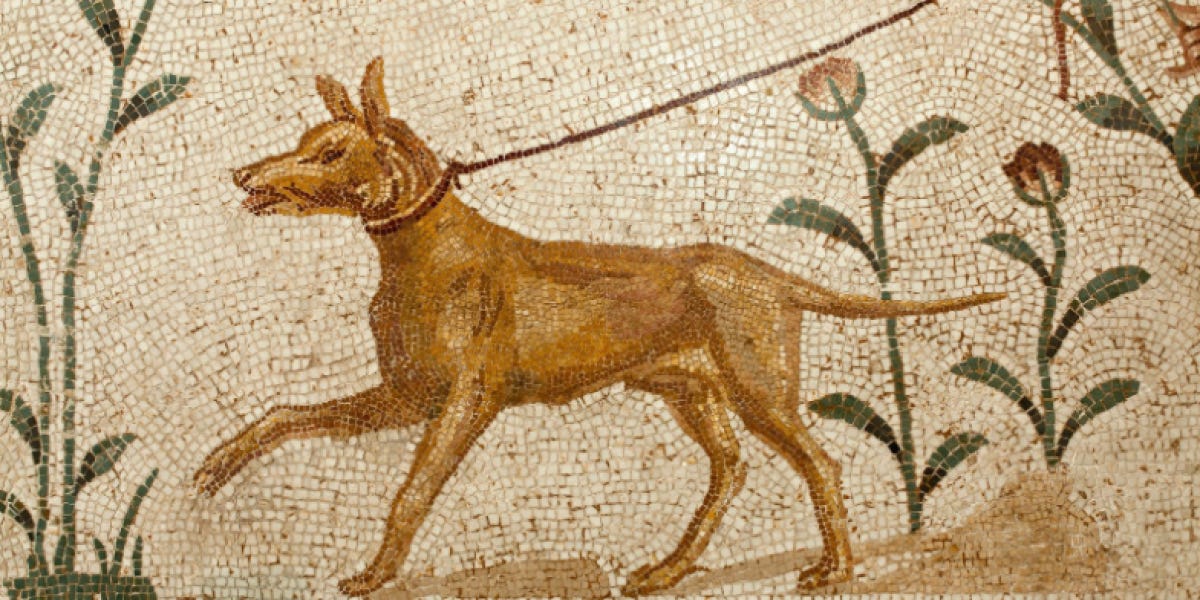
When August’s heat begins to feel oppressive and your thoughts feel like mirages in the late-season haze, you know you’ve reached the dog days of summer. But what does all that heat and discomfort have to do with dogs? Let’s get into it!
The dog in question is in fact Sirius, the brightest star in the night sky. It is also known as ‘the dog star’ due to its location within the constellation Canis Major, the great hound, which follows its master Orion across the heavens in an eternal cosmic hunt. The story goes that Orion was a fearsome hunter who suffered from the classic hero’s affliction of being just a little too arrogant, which caused him to fall foul of the gods. And the punishment for angering the gods is of course death. Some say it was Gaia who killed Orion by means of a scorpion while other accounts have Artemis shooting him with an arrow. Either way, after dying the Olympians raised him to the heavens as a constellation in recognition of his greatness, and they were even thoughtful enough to send up his two faithful hounds alongside him, these being Canis Major and Canis Minor.
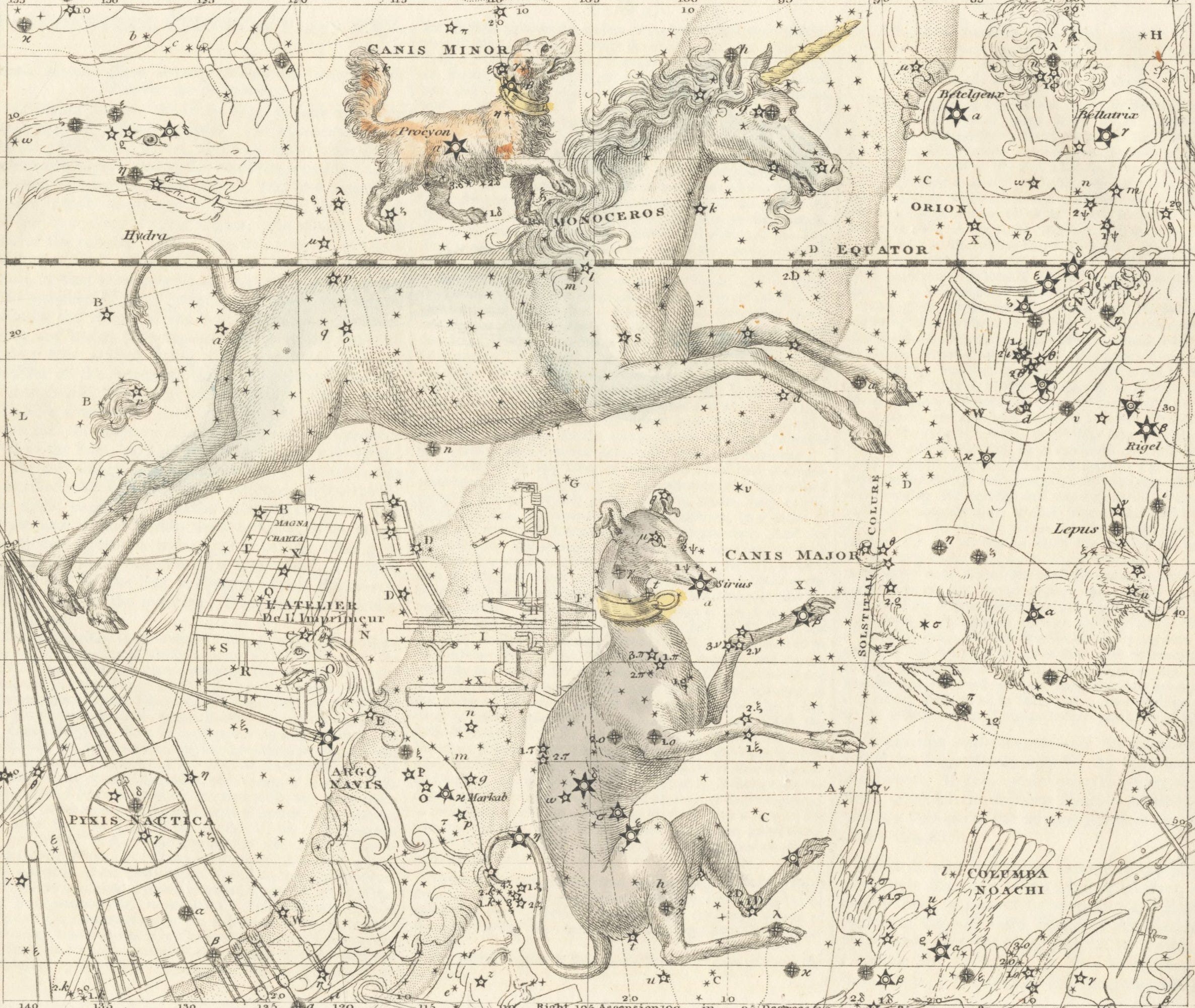
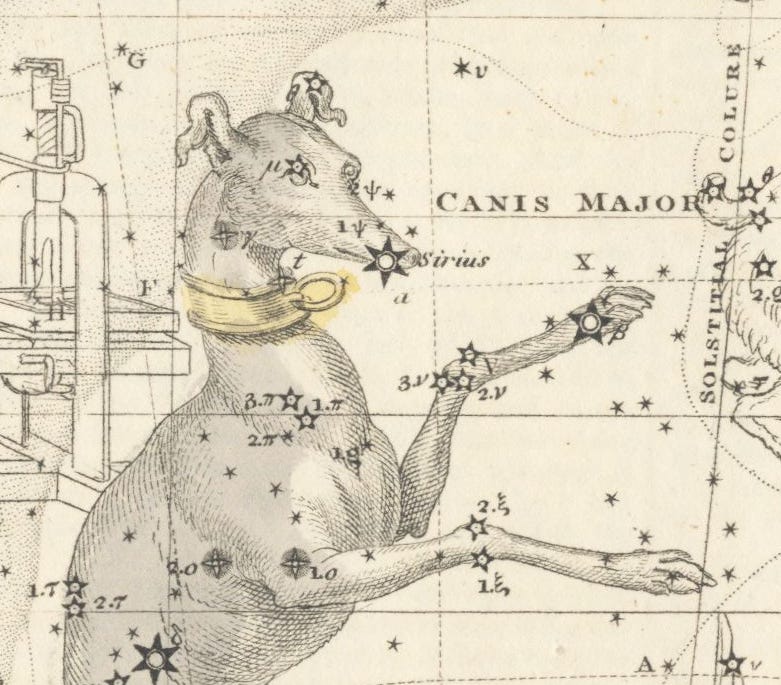
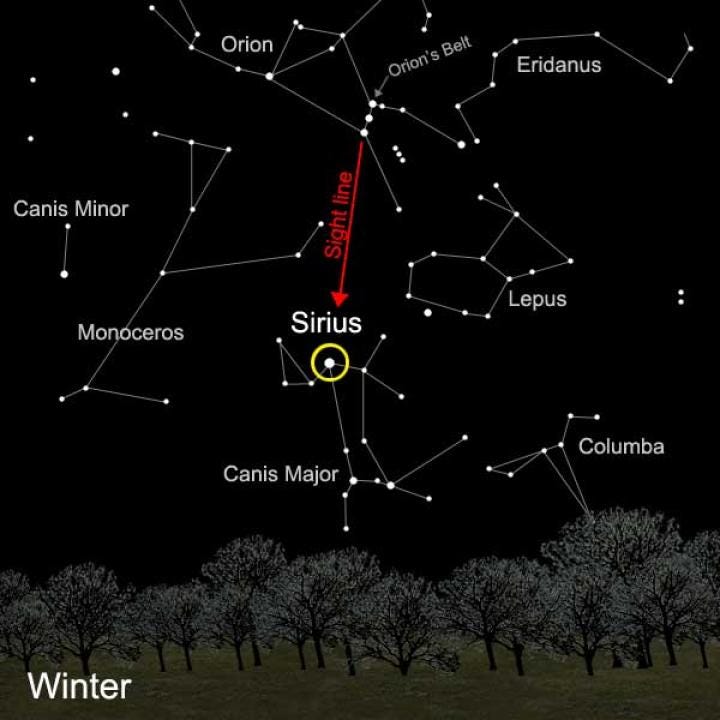
If Orion’s distinctive belt is visible in the night sky, extend its line downwards and you’ll find the glowing blue-white light of Sirius close by.
This isn’t possible all year, though. For much of the spring and summer, Sirius is above the horizon during the daylight hours, making the star all but impossible to see. (Not completely impossible, though—Sirius is so bright that under rare conditions it is visible to the naked eye during the daytime.) It is only toward the end of July or early August that Sirius begins to rise at night.
Stargazers in Ancient Greece recognised that Sirius’ rise heralded the hottest time of the year, and the star became known as a harbinger of that scorching, dry, unhealthy period, or perhaps even the cause of it. In line with Greek beliefs that the movements of the cosmos were influential upon the health, fate, and fortune of those on Earth, it was imagined that Sirius was responsible for all manner of ills and unusual behaviour. Hesiod sums it up as such:
But when the artichoke flowers, and the chirping grass-hopper sits in a tree and pours down his shrill song continually from under his wings in the season of wearisome heat, then goats are plumpest and wine sweetest; women are most wanton, but men are feeblest, because Sirius parches head and knees and the skin is dry through heat.
—Hesiod, Works and Days
Sirius is also invoked in the Iliad: Achilles’ approach toward Troy where his duel with Hector awaits is described as such:
as he swept across the flat land in full shining, like that star
which comes on in the autumn and whose conspicuous brightness
far outshines the stars that are numbered in the night’s darkening,
the star they give the name of Orion’s Dog, which is brightest
among the stars, and yet is wrought as a sign of evil
and brings on the great fever for unfortunate mortals.
—The Iliad, transl. Richmond Lattimore
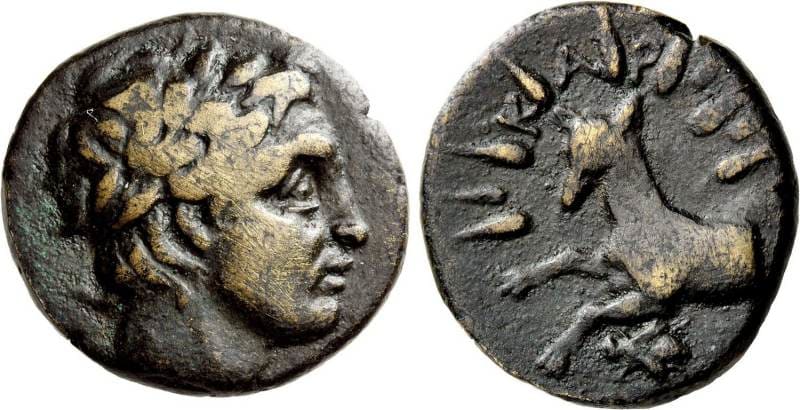
This time of year, when the dog star’s light was liable to produce adverse effects, was sometimes referred to in Greek as the κυνάδες ἡμέραι: kynades hemerai, literally the ‘dog days’. Although Sirius sticks around until early spring, its powers were believed to be at their strongest immediately before and after its rise in late summer, so the dog days typically included only July, August, and part of September. It has been theorised that this historic focus on late-summer Sirius is at least in part because in those months the star is closer to the horizon and therefore its light must take a longer path through the Earth’s atmosphere compared to when it is directly overhead. This exaggerates the star’s characteristic twinkling, making it appear to flash a dazzling array of colours visible to the naked eye. Perhaps this was interpreted as a heightened state of power for the malevolent star?
Here’s an example of what someone managed to capture without even a telescope.
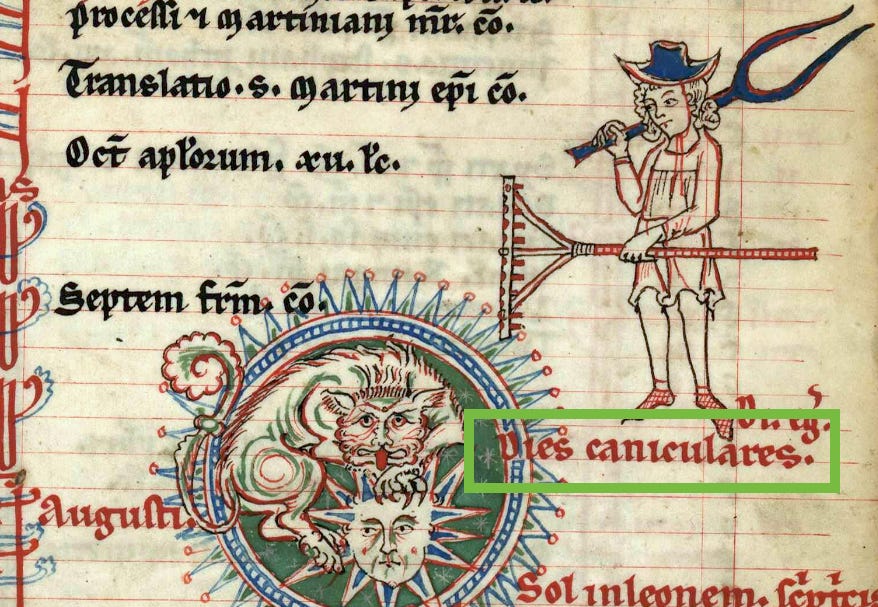
Like so much of Greek culture and science, this notion of the dog days was passed on to the Ancient Romans, who translated it into Latin as the dies caniculares—this uses the diminutive form of canis, meaning ‘dog’, so could be read as ‘little dog days’ or ‘puppy dog days’. And, like so much of Roman culture and science, this concept was further transmitted around Europe and remained relevant into the Middle Ages. Here, a calendar in a 13th century Swiss psalter marks mid-July as the beginning of the dies caniculares and early September as the end.
Even to this day, many languages in Europe preserve the Latin canicula or something very similar as a word for heatwave: canicola in Italian, kanikuła in Polish. If you’re speaking English, you can drop canicule into casual conversation, though you may draw some confused looks. For many centuries now, we’ve been translating the term into our own language.
There be sometimes of the yeare wherein purgations ought not to bee ministred, as in Somer, specially the Dogge daies.
—Philip Moore, Hope of Health (1564)
Autumn is closing in and the dog days are coming to an end (assuming you live in the Northern Hemisphere), and I, for one, am feeling grateful for the soothing winds and rains after a long, hot summer. We’ll see how many weeks of British winter that gratitude survives!
A little note from me!
If you enjoyed this article, I have a feeling you might be interested in my upcoming book, THE WORDSPOTTER’S GUIDE!

If you love words and language, history, my blog, my weird medieval guys work in general, pestering your friends/family/coworkers with fun facts, or owning books with beautiful covers—or you know someone else who loves any of those things—this is the book for you. I even wrote a blog post with lots more information about it!
Preorder it now! It would mean the world to me!!
The Wordspotter’s Guide is out November 10th, 2026 in the USA via Penguin Random House. Options for USA preorders can be found on their website here!
The Wordspotter’s Guide is out November 5th, 2026 in the UK via Profile Books. Options for UK preorders can be found on their website here!
If you do not live in the UK or USA, you can preorder with FREE WORLDWIDE SHIPPING from Blackwell’s here!
Or, as always, wherever you may live, ask your local independent bookshop or your public library to order a copy for you!
Preorders are hugely important for determining the success of a book, especially one written by a lesser-known author such as myself. Each one of you who puts your faith in this book before it has even been released is sending a message to my publishers and booksellers that I and my projects are worth supporting and promoting! In turn, that support and promotion can make or break my career. If you like the sneak peeks you’ve seen so far and think you’d enjoy ca. 300 pages of similar content, it would mean the world to me if you’d consider preordering.
Happy wordspotting!
I saw your note about this the other day and was thrilled to see a whole article about it now. Super interesting! Dog Days Are Over by Florence and The Machine is going to be playing in my head all day, lol.
thank you for all intel!! I had thought simply that late August was a good time to lie on your belly in the shade as all the smart dogs do at this time of year......